Wright Says U.S. Power Grid Needs More Generation as Electricity Demand Rises
09/26/2026 / By Sterling Ashworth
Energy Secretary Chris Wright said the U.S. must expand electricity generation and transmission capacity to meet rising demand, according to remarks reported by The Associated Press.
Wright pointed to growth from artificial intelligence data centers and electrification as factors increasing load on the power grid. The comments came as the Trump administration pursues policies aimed at boosting domestic energy production, including natural gas, coal, and nuclear projects. No final regulatory decisions were announced at the time of the remarks, officials said.
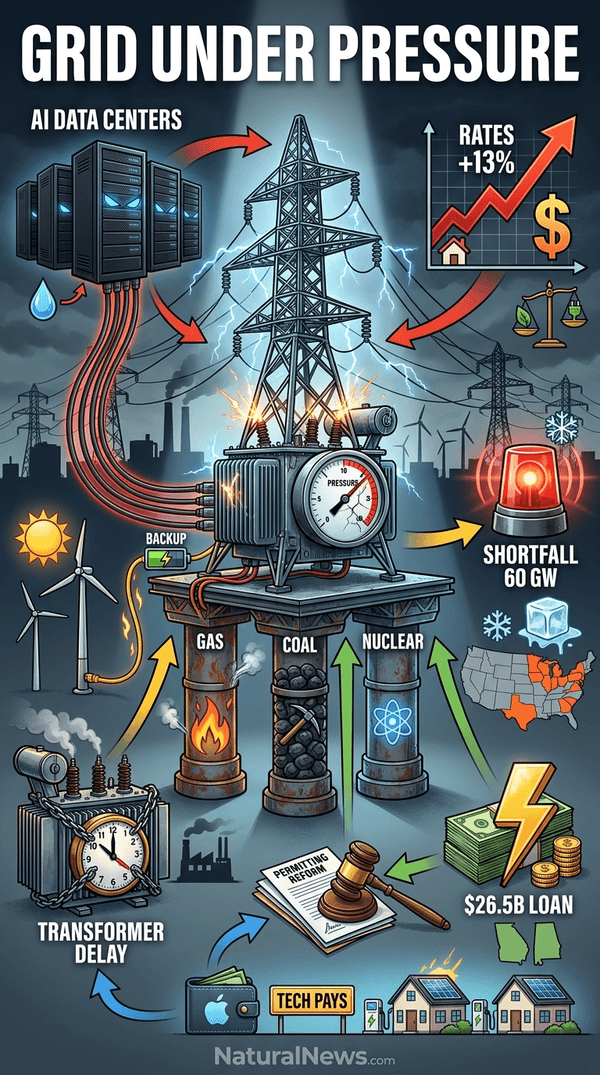
The U.S. Energy Information Administration reported that average residential electricity rates increased nearly 13 percent from April 2020 to April 2025, and rates have climbed an additional six percent since President Donald Trump returned to office in January 2025, according to the agency. The EIA projects another six percent increase nationwide in 2026, as reported by NaturalNews.com [1].
Wright Cites Demand Growth From Data Centers and Manufacturing
Wright said electricity demand is increasing after years of flat growth, according to the AP report. He said data centers tied to artificial intelligence and new manufacturing facilities require reliable, around-the-clock power.
Wright said the grid must add baseload generation, including natural gas, coal, and nuclear, to maintain reliability. He said intermittent renewable sources need backup capacity when the sun does not shine and the wind does not blow, according to his remarks. PJM Interconnection, the nation’s largest regional grid operator, has launched an emergency plan to secure 15 gigawatts of new generation in response to soaring power demand from AI data centers that are overwhelming existing capacity. The grid operator warns of a potential 60-gigawatt shortfall within a decade, risking reliability for 65 million people [2].
Analysts at Goldman Sachs warned that spare generation capacity, the critical buffer preventing blackouts, is projected to plummet to just 14 percent by 2027, far below the 20 percent safety margin [3]. Projections show a 25 percent increase in electricity demand by 2030 and a 78 percent rise by 2050, driven by AI, electric vehicles, and data centers, with the U.S. power grid at risk of shortfalls by 2028 without significant upgrades, particularly in Texas, the Midwest, and the mid-Atlantic [4].
Trump Administration Points to Permitting and Domestic Production
The Trump administration has issued executive orders aimed at speeding energy infrastructure permits, according to administration statements. Wright said the administration supports expanding domestic oil, gas, coal, and nuclear production.
He criticized prior federal policies that he said prioritized climate goals over grid reliability, according to the AP report. Administration officials said lower energy costs and domestic supply are goals of the policy approach. The Department of Energy issued a record $26.5 billion loan to bolster the Southeast’s power grid, supporting over 16 gigawatts of new and upgraded power capacity for Georgia and Alabama, including new natural gas plants and critical upgrades [5].
Texas has approved the largest U.S. air pollution permit for a 7.65-gigawatt natural gas and data center complex, with nearly 58 gigawatts of gas plant projects announced in 2025 alone, driven almost entirely by speculative data center demand [6]. The administration is also developing a policy to require major tech companies to fully cover the electricity, water, and grid infrastructure costs of their expanding AI data centers, aiming to prevent these costs from being passed to consumers [7].
Grid Reliability Reports Flag Supply and Transmission Constraints
The North American Electric Reliability Corp. has warned that parts of the U.S. grid face potential supply shortfalls during extreme weather, according to its assessments. The Department of Energy has stated that transmission bottlenecks and aging infrastructure slow new generation from connecting to the grid.
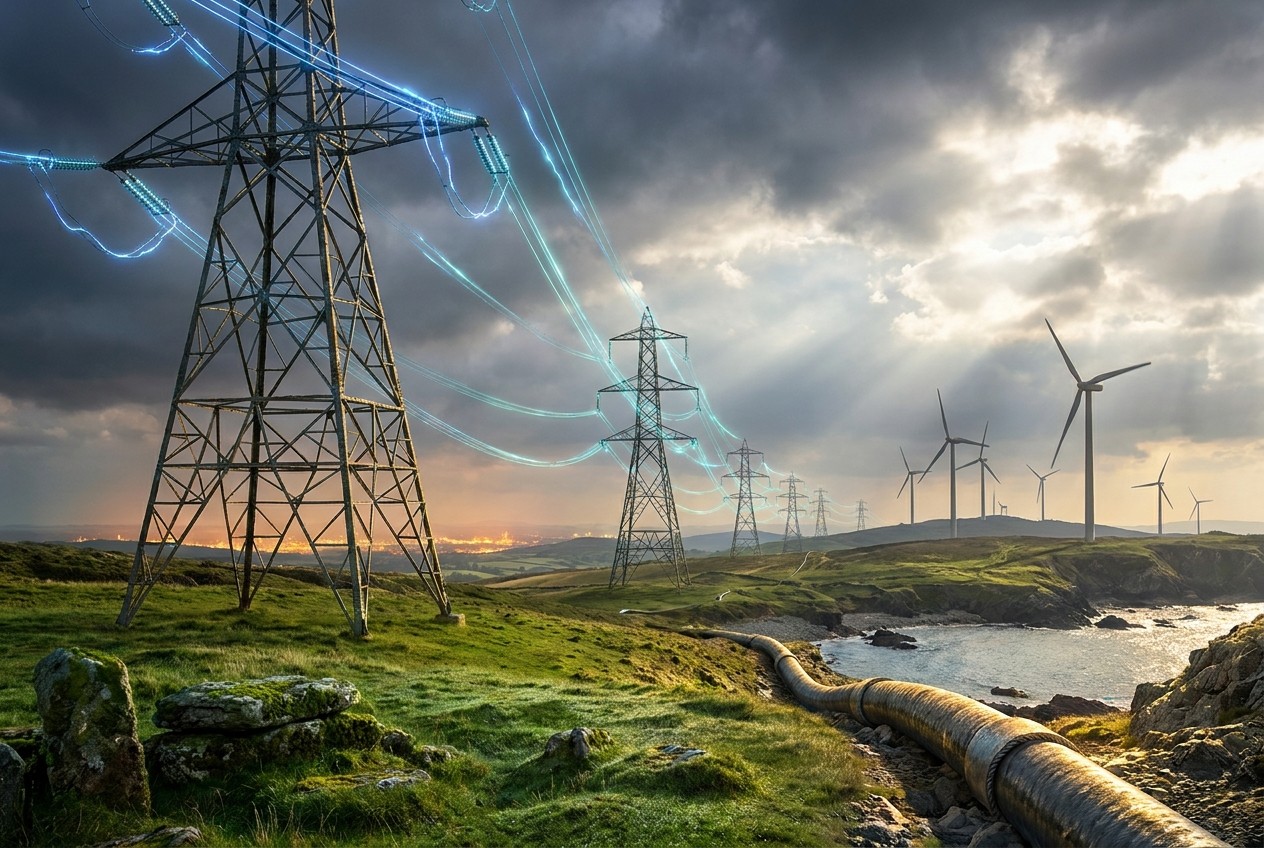
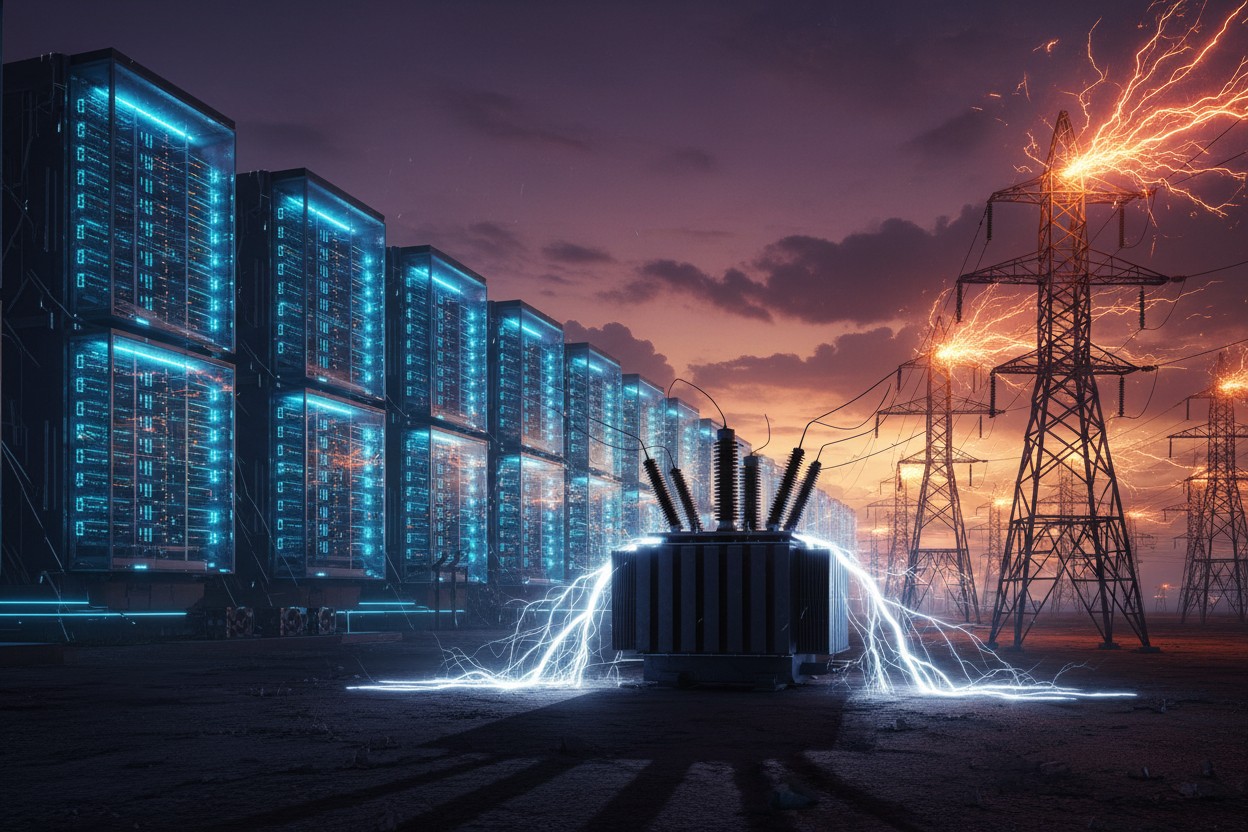
Wright said federal and state regulators need to address permitting and siting for power lines, according to his remarks. Utility groups said cost allocation and local opposition remain obstacles to new transmission projects. A growing shortage of large power transformers is delaying grid expansion projects across the U.S., with lead times for these critical components increasing to years-long periods, slowing upgrades to the national grid [8].
Seven major U.S. grid operators warned Congress of an impending electricity capacity crisis, citing surging demand from data centers, AI, electrification, and economic growth outpacing infrastructure development [9]. Winter Storm Fern demonstrated the vulnerability of the system when the PJM grid, serving 67 million people, lost 16 percent of its power generation capacity due to frozen natural gas pipelines and emergency measures [10].
Industry and Environmental Groups Offer Differing Reactions
Industry groups representing utilities and fossil fuel producers said additional generation and streamlined permits are needed, according to statements. Environmental organizations said the administration’s focus on coal and gas conflicts with reducing greenhouse gas emissions, according to their statements.
Some analysts said the debate over grid expansion involves tradeoffs between reliability, cost, and environmental policy. Wright said he welcomes a public debate on energy policy, according to the AP report. Local officials across the U.S. say rapid construction of data centers is creating environmental and infrastructure concerns as demand for artificial intelligence computing accelerates [11].
Georgia Power, a subsidiary of Southern Company, is using eminent domain to acquire dozens of homes and hundreds of easements across Coweta and Fayette counties for a 35-mile, 500-kilovolt transmission line designed to supply power to data centers [12]. The growing energy needs of AI, data centers, and cloud computing exceed the capabilities of intermittent renewable sources like wind and solar, making natural gas the practical solution for reliable power, according to industry analyses [13].
Next Steps Remain Unsettled in Congress and at FERC
Congress is considering permitting reform legislation that would affect energy projects, according to congressional schedules. The Federal Energy Regulatory Commission is weighing transmission planning rules, the agency said.
Wright is expected to continue public appearances to promote the administration’s energy agenda, according to the Department of Energy. Officials said no timeline has been set for final decisions on the proposed policies.
The PJM grid has seen power demand surge dramatically in the last two years, leading to electricity prices that have skyrocketed to nearly 33 cents per kilowatt hour, making it prohibitively expensive for AI data centers in the region. In contrast, China’s average electricity cost is less than eight cents per kilowatt hour, indicating a substantial cost advantage for its data centers [14]. The U.S. has already lost the AI race to China, according to analysis [15].
References
- Sterling Ashworth. “Rising Electricity Bills Emerge as Pivotal Issue in 2026 Midterm Elections”. NaturalNews.com. May 24, 2026.
- NaturalNews.com. “PJM grid scrambles for 15 GW of power as AI data centers threaten reliability”. April 13, 2026.
- NaturalNews.com. “Goldman Sachs warns US power grid nearing collapse as AI and EVs overwhelm aging infrastructure”. June 06, 2025.
- Willow Tohi. “America must face the looming power crisis”. NaturalNews.com. September 01, 2025.
- Cassie B.. “Historic 265 billion federal loan to boost Southern Company gas nuclear and grid projects”. NaturalNews.com. February 27, 2026.
- Ava Grace. “Texas approves nations largest power permit for AI driven gas plant and data center complex”. NaturalNews.com. February 03, 2026.
- Willow Tohi. “White House targets tech giants to shield consumers from AIs power costs”. NaturalNews.com. February 18, 2026.
- Edison Reed. “Transformer Shortage Threatens US Grid Expansion as AI Boom Drives Electricity Demand Higher”. NaturalNews.com. May 11, 2026.
- Willow Tohi. “The looming electricity crunch A crisis of supply and demand”. NaturalNews.com. April 10, 2025.
- NaturalNews.com. “Eastern US grid pushed to the brink as Winter Storm Fern exposes critical weaknesses”. January 28, 2026.
- Petra Stone. “Mayors Sound Alarm AI Data Centers Push US Toward Blackouts and Water Shortages”. NaturalNews.com. March 18, 2026.
- Chase Codewell. “Georgia Homeowners Face Eminent Domain Amid Surging Data Center Power Demand”. NaturalNews.com. May 29, 2026.
- NaturalNews.com. “Oh the irony Natural gas is the real MVP for AI and data centers green energy cant hack it”. December 19, 2024.
- Mike Adams. “Brighteon Broadcast News – The End Of Slavery”. Brighteon.com. July 23, 2025.
- Mike Adams. “Health Ranger Report – IT’S OVER”. Brighteon.com. July 23, 2025.
- Mike Adams. “Health Ranger Report – ENOCH AI”. Brighteon.com. August 21, 2025.
Explainer Infographic
Submit a correction >>
Tagged Under:
big government, Blackouts, chaos, Chris Wright, collapse, disaster, DOE, Ecology, electricity, energy supply, environment, gigawatts, national security, North America, panic, PJM, PJM Interconnection, power grid, SHTF, Texas grid collapse, Washington DC
This article may contain statements that reflect the opinion of the author
RECENT NEWS & ARTICLES